
How to Choose the Right 3D Printing Service for Your Project

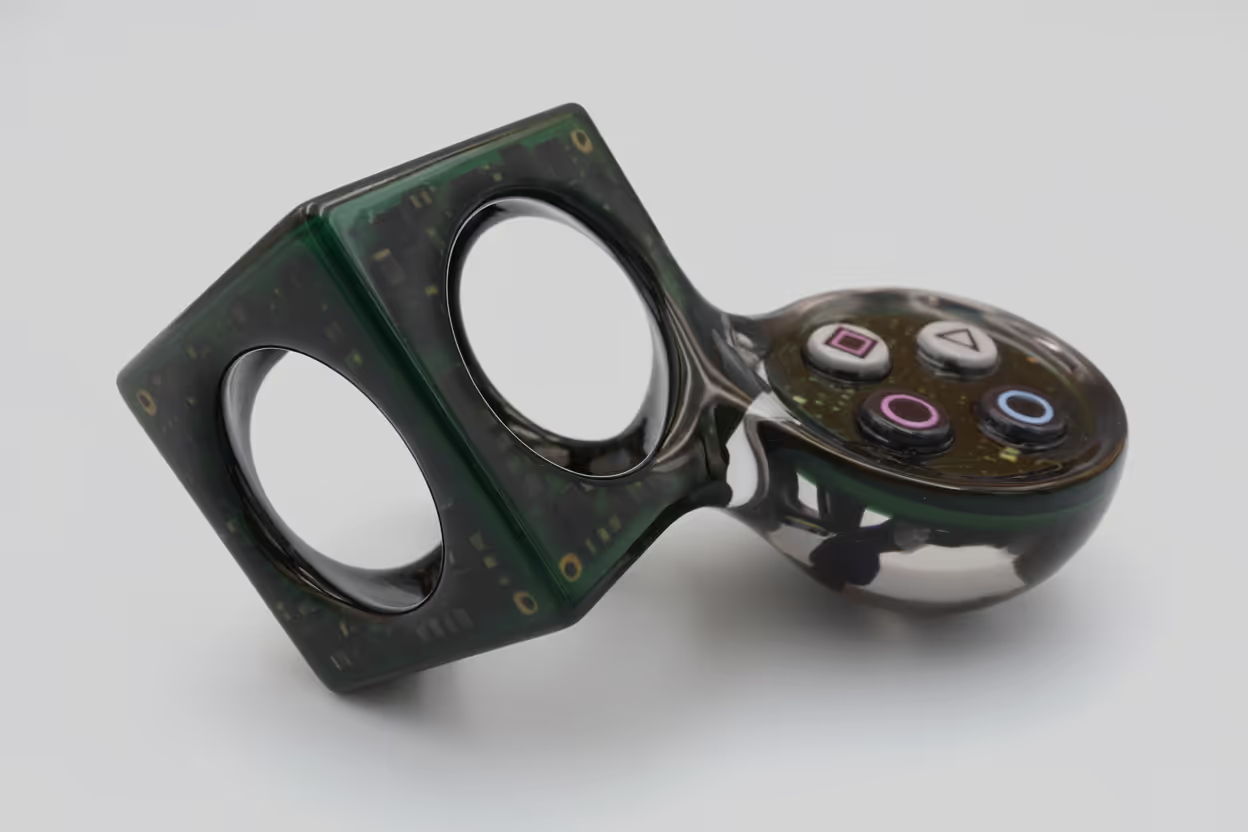
Fidget toy combining a transparent cube with circuit-like patterns and a rounded section with four PlayStation-style buttons.

Whether you’re a hobbyist prototyping a custom figurine or a small business looking to produce functional components — selecting the right 3D printing service can make or break your project. The wrong choice might result in poor print quality, long lead times, or cost overruns. In this blog post, we walk you through the most important factors to consider when choosing a 3D printing service. Use this guide to make an informed decision and avoid common pitfalls.

Why Picking the Right 3D Printing Service Matters

  • Quality & Precision: Put simply — 3D printing is as good as the machine, materials, and expertise behind it. A reliable service will give you accurate results and consistent quality.
  • Cost Efficiency: Poor optimization (e.g. inefficient layout, unnecessary supports, wrong material choice) can inflate cost per print, especially when producing multiple pieces.
  • Time & Convenience: A fast, professional service will save you time and hassle — from quoting to printing to shipping.
  • Reliability & Support: Post-print support (revisions, finishing, quality checks) matters — especially for business or functional use.

Given these stakes, it’s worth taking time to choose wisely.

Key Factors to Evaluate When Evaluating a 3D Printing Service

1. Material & Technology Options

Not all 3D printing jobs are equal. Some require strong, durable materials (e.g. functional parts), others need fine detail (e.g. detailed prototypes or miniatures). Make sure the service offers:

  • Variety of materials (PLA, PETG, ABS, resin, specialty materials, etc.)
  • Relevant printing technologies — FDM, SLA/DLP, resin printing, SLS/metal (if available)
  • Good finishing options (sanding, polishing, supports removal, painting/coating, etc.)

2. Transparency in Pricing (Especially for Batch or Multiple Objects)

If you’re printing multiple parts in a single job, you want transparent pricing. Key considerations:

  • Is the cost quoted per object or per print run volume?
  • How are unconnected objects handled (e.g. multiple small pieces in one print)?
  • Does the service show approximate printing volume before payment?
  • Are there clear terms for failed prints or reprints?

For example, if a service lumps unconnected pieces together without clarifying volume, costs can become unexpectedly high.

3. Quality Assurance & Post-Processing

A professional service should offer:

  • Quality checks (layer adhesion, warping check, dimensional accuracy)
  • Post-processing: support removal, sanding, smoothing, finishing, optionally painting/coating
  • Proper packaging and safe shipping (if applicable)

4. Lead Times & Turnaround

Depending on your need — prototype vs production vs prototype-to-production — turnaround time matters. Evaluate:

  • Typical printing lead time (single print vs batch print)
  • Communication: how quickly does the service respond to queries or issues?
  • Flexibility: rush jobs, partial shipments, iterative prints for prototyping

5. Reputation, Reviews & Transparency

Even in 3D printing — trust matters. Check:

  • Reviews from past customers — for quality, communication, delivery
  • Examples / portfolio of past works (photos, case-studies)
  • Transparency (before/after photos, actual print data, real-world tolerances)

6. Support for Design & Advisory (If you Need It)

A great 3D printing service doesn’t just print — it advises. This can help avoid issues like weak prints, over-use of supports, design tweaks for manufacturability, etc.

How to Compare & Shortlist 3D Printing Services — A Checklist

✅ What to Check💡 Why It MattersMaterial & printing tech offeredDetermines what you can actually print — strength, detail, functionalityPricing transparency (volume, object count, supports, reprint policy)Avoid unexpected costs or hidden chargesQuality assurance & finishing capabilitiesFinal prints meet your standards, avoid defective outputsLead time & communication responsivenessKeeps your project timeline on trackReputation, reviews, portfolioBuilds confidence in quality and reliabilityAdvisory & design support (if required)Helps get better prints, avoid common mistakes

Pro tip: Treat this like buying a service — not a commodity. A low price is good, but not if it comes with poor quality or long delays.

How a Professional 3D Printing Service (Not Just Hobbyist-Level) Adds Value

When you work with a professional-grade 3D printing service rather than a casual hobbyist, you often get:

  • Better printing machines (higher-end FDM or resin/SLA, sometimes even SLS or specialty materials)
  • Consistent quality across multiple prints or batches
  • Post-processing — sanding, smoothing, finishing, polishing, painting, coating
  • Quality control, reprint policies, transparent communication
  • Better scalability: you can grow from single prototypes to small-scale production without changing provider

For small businesses and serious hobbyists alike, this can translate to time saved, higher quality, fewer errors, and — ultimately — better ROI.

Questions to Ask Before You Hit ‘Print’

  1. What printing technology and material will you use for my project?
  2. Can you show me a sample or portfolio similar to my design?
  3. How do you price — per piece, per run, or based on volume?
  4. What finishing / post-processing do you do?
  5. What’s your typical lead time for prints like mine?
  6. Do you offer revisions or reprints if the first one fails?

Use these as a mini-interview. If a provider hesitates or gives unclear answers — consider it a red flag.

Why Your Choice Today Can Influence Future Projects

Even if you only need one print now — picking a good printing partner sets a foundation. If you’re launching a startup, prototyping repeatedly, or want to scale — a reliable service saves time, cost, and headaches in the long run.

Building a relationship with a quality 3D printing provider ensures you have a dependable go-to partner whenever you have new designs, modifications, or production-scale needs.

Conclusion

Choosing the right 3D printing service isn’t just about the lowest price or the fastest turnaround — it’s about quality, transparency, support, and scalability. By evaluating material options, pricing model, finishing quality, lead time, reputation, and design support, you’ll be better positioned to get consistent, high-quality prints that meet your needs — whether as a hobbyist or a small business owner.

If you evaluate your options carefully, you’ll likely end up with a partner who can grow with you as your needs evolve.

Use this guide as a checklist — and treat your 3D printing service the way you’d treat any serious vendor.